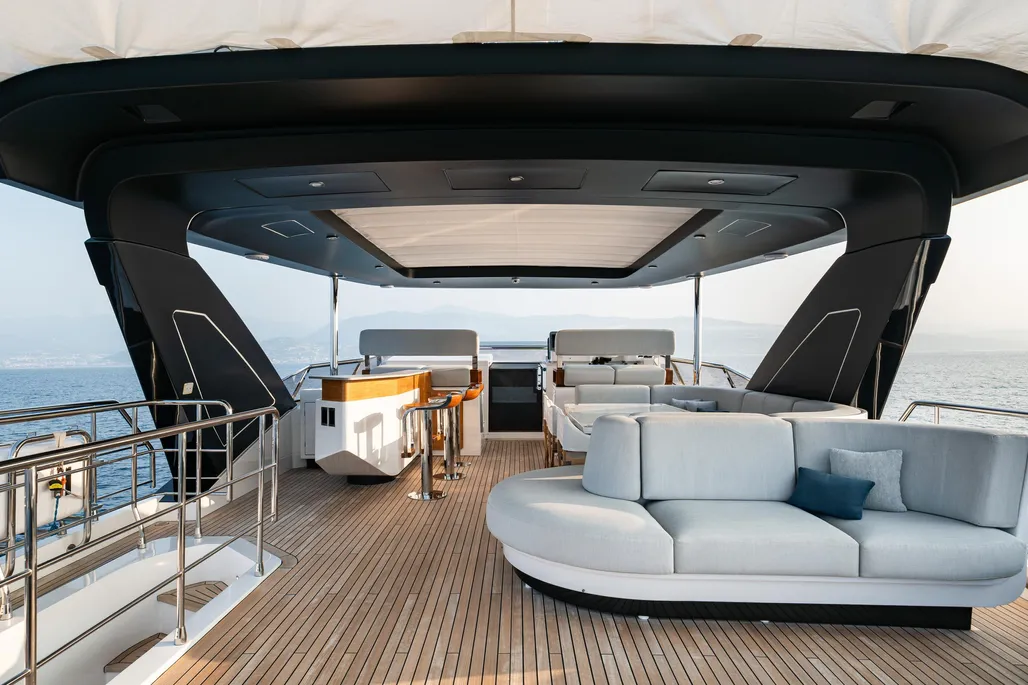
Every sustainable yacht charter decision made on the water — from fuel choice to waste disposal — has a direct impact on the Adriatic ecosystem that makes Croatia worth visiting in the first place. Marine biodiversity along this coast is shifting in real time, and some operators genuinely protect it while others simply use green language for marketing. This guide covers practical, actionable eco yachting habits drawn from real experience sailing these waters.
In This Guide
Key Takeaways
- Reducing cruising speed from 24 knots to 10 knots on a typical motor yacht cuts fuel consumption by up to 70%, saving hundreds of euros per day in the high season.
- Kornati National Park charges an entry fee of approximately €30–€50 per vessel per day, and mooring on Park buoys is mandatory — anchoring on seagrass is illegal and fined on the spot.
- Blue Flag–certified marinas in Croatia include ACI Marina Split, ACI Marina Hvar, and Marina Tribunj — all have shore power, waste pump-out stations, and greywater management infrastructure.
- The Maestral wind typically builds along the central Dalmatian coast between 1pm and 3pm daily in July and August, making 6am–10am departures both fuel-efficient and faster downwind.
- Posidonia oceanica seagrass meadows, which support over 400 marine species in the Adriatic, regenerate at only 1–6 cm per year — a single dragged anchor can destroy decades of growth.
Why Sustainable Yacht Charter Matters on the Adriatic
The Croatian coast stretches for 1,778 kilometres of mainland shoreline plus 1,244 islands, islets, and reefs. That figure sounds vast, but the marine corridors between islands are surprisingly shallow and ecologically sensitive — the seabed between Šibenik and the Kornati archipelago averages just 20–35 metres depth. What happens in those waters accumulates fast.
Posidonia oceanica seagrass meadows, for example near Primošten, are vulnerable to repeated anchor drag from unguided charter boats. Posidonia is not a minor plant — it produces up to 14 litres of oxygen per square metre daily and supports the fish stocks that make Croatian diving and fishing so exceptional. Protecting it is not optional if you want those same ecosystems to exist in ten years.
Charter tourism in Croatia generates over €400 million annually. When operators and guests make conscious choices — proper waste management, regulated anchorages, certified marinas — a meaningful share of that economic pressure is redirected away from the most vulnerable habitats. If you’re considering a Croatia yacht charter, this guide will help you make choices that protect the experience for future guests.
Core Eco Yachting Practices Aboard
Good eco yachting starts before the engine turns over. On every charter I plan through Splendid Yachting, we run through a pre-departure checklist that covers waste, chemical use, and provisioning. None of it requires sacrifice — it requires awareness.
What products should you avoid bringing on board?
Sunscreens containing oxybenzone and octinoxate are chemically documented coral and seagrass disruptors. Bring mineral-based SPF products instead — brands like Stream2Sea and Raw Elements are reef-safe and widely available in Split’s pharmacies on Marmontova Street. Standard biodegradable soap is equally important because conventional detergents wash directly into the sea via cockpit drains.
Single-use plastics are the other consistent problem. We supply guests on our fleet with reusable stainless steel water bottles and ask provisioning suppliers to use bulk containers rather than individual plastic bottles. On a one-week charter with six guests, this alone eliminates roughly 80–120 plastic bottles entering the waste stream.
Managing waste water and bilge discharge
Croatian law prohibits discharge of sewage within 3 nautical miles of the coast, but in practice, nearly every anchorage on a typical itinerary falls within that zone. Macerators and holding tanks are standard on modern charter yachts — the Olivia Magellano 60 in our fleet, for example, has a 200-litre holding tank and an onboard grey water management system. Pump-out facilities are available at ACI Marina Split, ACI Marina Trogir, and ACI Marina Korčula.
Bilge water contaminated with engine oil is a different concern. We train all our skippers to use bilge absorbent pads rather than pumping directly overboard. It is a small change with a disproportionate impact — a single litre of engine oil can contaminate up to one million litres of seawater.
Green Charter: Fuel, Speed, and Route Efficiency
The most significant environmental lever on any motor yacht charter is throttle management. This is where a green charter philosophy produces the biggest measurable impact, and it also happens to be where guests often save the most money.
A 60-foot motor yacht burning diesel at full throttle (24–26 knots) consumes approximately 200–250 litres per hour. Drop to 10 knots, and that figure falls to roughly 35–50 litres per hour on the same vessel. On a seven-day itinerary covering 400 nautical miles, the fuel saving at cruise speed versus full throttle is substantial — money that guests can redirect toward a better provisioning budget or marina experiences.
How does sailing speed affect the environment on a charter?
The relationship is not just about volume of fuel burned — lower-speed diesels also produce fewer particulate emissions and less acoustic pollution underwater. Cetaceans (dolphins and bottlenose porpoise are regular sightings in the Vis Channel, approximately 45 nautical miles southwest of Split) are sensitive to low-frequency engine noise. Cruising at 9–11 knots reduces underwater sound pressure significantly compared to planing speed.
Route planning also matters. Sailing the leeward side of islands like Brač and Hvar between 6am and 10am, before the Maestral fills in, often allows motor yachts to make excellent time on flat water at lower RPM. We build every Split-based itinerary around morning departures precisely for this reason — it’s faster, quieter, and cheaper.
Shore power at marinas is another tool worth using deliberately. Plugging into marina electricity rather than running a generator overnight eliminates idle diesel consumption and the associated noise, which matters both for marine life and for the sleep quality of guests in nearby boats.
Planning your sustainable yacht charter itinerary?
Let our charter team help you plan the perfect route →Choosing a Sustainable Marina in Croatia
Not all marinas along the Dalmatian coast operate to the same environmental standard. A sustainable marina invests in infrastructure that prevents pollution rather than simply managing it after the fact. When I’m routing a client’s week, marina selection is one of the first ecological decisions I make.
Which Croatian marinas hold environmental certification?
The Blue Flag programme is the most recognised international standard — Croatia consistently leads Europe in Blue Flag marinas, with over 100 certified beaches and marinas in 2024. For yacht charters specifically, ACI Marina Split (berths for vessels up to 35 metres, shore power at every berth), ACI Marina Hvar (68 berths, waste pump-out station, sewage connection), and Marina Tribunj near Šibenik are consistently certified. Marina Agana near Trogir received Blue Flag certification in 2022 and has expanded its greywater treatment infrastructure since.
Beyond certification, I look for marinas with active recycling facilities — sorted waste bins for glass, plastics, and organics. ACI Marina Korčula has had these in place since 2019, and the staff are actively engaged with guests about proper sorting. It makes a practical difference when you’re offloading a week’s worth of provisions waste from a charter for eight.
For guests exploring the Kornati islands, where no ACI marina exists within the park boundary itself, the nearest reliable sustainable marina option is ACI Marina Šibenik, approximately 18 nautical miles north of the park’s northern entrance. You can read more about navigating this area in our Kornati National Park guide.
Environmental Yachting: Anchoring Responsibly
Environmental yachting comes down to one rule above all others on the Croatian coast: never anchor on seagrass. Posidonia meadows are legally protected under Croatian environmental law and EU Habitats Directive, and Croatian harbour masters actively patrol sensitive areas in July and August. A fine for anchoring in prohibited zones starts at €700 for private vessels and escalates to over €2,000 for commercial charter craft.
Photo Gallery


Beyond the legal issue is the ecological one. A 15-metre yacht dropping a 15-kilogram anchor with 40 metres of chain can physically destroy an area of Posidonia up to 400 square metres as the chain swings through the tidal cycle overnight. That meadow, as I mentioned earlier, regenerates at 1–6 centimetres per year.
Where can you anchor safely between Split and Dubrovnik?
The good news is that Croatia has invested in mooring buoy systems at most sensitive locations. Stiniva Cove on Vis island (accessible in approximately 3.5 hours from Split at 9 knots, 35 nautical miles) has 10 officially maintained buoys managed by the local commune. Luka Tatinja on Lastovo, roughly 80 nautical miles from Split and a 7-hour cruise, offers 15 buoys on a sandy bottom with no Posidonia present. Our Vis Island guide details the buoy locations and booking contacts.
Sandy bottom anchorages where free anchoring remains both legal and ecologically safe include Lučica Bay on Korčula’s south coast, Žitna Cove on Korčula island, and the bay at Polače on Mljet — where anchoring outside the National Park buoy zone on a sand patch is permitted. The Mljet National Park guide covers this in detail.
Water visibility in the Kornati channels during September often exceeds 35 metres. This clarity is directly tied to the health of surrounding seagrass — when you can see the bottom before dropping anchor, use that visibility to confirm you’re on white sand, not green meadow.
Sample 7-Day Eco-Conscious Itinerary from Split
This route works best in May and September, when anchorages are quieter and sea conditions more predictable. It covers approximately 280 nautical miles round-trip and prioritises certified marinas and protected mooring buoys throughout.
Day 1 — Split to Hvar Town: 36 nautical miles, ~3.5 hours at 10 knots. Depart ACI Marina Split at 7am before the Maestral builds. Berth at ACI Marina Hvar (Blue Flag certified). Evening dinner at Gariful restaurant on the waterfront, known for locally caught sea bass and lobster sourced directly from Hvar’s fishing cooperative. Plug into shore power overnight.
Day 2 — Hvar to Vis (Komiža): 28 nautical miles, ~3 hours. Round Rt Pelegrin on Hvar’s western tip with typically flat morning seas. Anchor off Biševo’s Blue Cave on a park buoy (€20 per vessel) before continuing to Komiža. Komuna restaurant in Komiža serves peka-cooked lamb and local white wine from Vugava grapes found only on Vis. For more on this island, see our full Korčula guide for the following leg.
Day 3 — Vis to Korčula: 38 nautical miles, ~4 hours. Depart at 6am. Use the Vis Channel with the Maestral at your back by midday. Berth at ACI Marina Korčula (Blue Flag certified). Walk the medieval old town walls — the city grid dates to the 4th century BC. Dinner at LD Restaurant, which sources 80% of its produce from local Korčula farms and fishing boats.
Day 4 — Korčula to Mljet National Park: 24 nautical miles, ~2.5 hours. Early departure and mooring at park-managed buoys at Polače. Entry fee approximately €15 per person. Kayak the freshwater lakes in the afternoon — zero-emission activity, zero impact.
Day 5 — Mljet to Lastovo: 32 nautical miles, ~3.5 hours. Anchor at Luka Tatinja on park buoys. Lastovo Nature Park covers 53 square kilometres and has no car-ferry service — it remains one of the least-visited inhabited islands on the Adriatic. Total artificial light pollution here is near zero, making it exceptional for stargazing.
Days 6–7 — Lastovo to Split via Brač: 82 nautical miles total. Overnight stop in Bol, Brač, with dinner at Taverna Riva overlooking Zlatni Rat beach. Final morning passage of 35 nautical miles back to Split, arriving before noon to allow full vessel pump-out at ACI Split before the next charter rotation.
This itinerary keeps all overnight stops at Blue Flag marinas or certified buoy systems. Total fuel consumption at 10 knots averages 280 litres for a 60-foot motor yacht — roughly 40% of what full-throttle passage-making would require. For a broader look at route options, our comprehensive sailing Croatia guide covers regional variations in detail.
Frequently Asked Questions
What makes a yacht charter “sustainable” in Croatia?
A sustainable yacht charter combines several practices: using certified Blue Flag marinas with shore power and waste pump-out facilities, avoiding anchor damage to Posidonia seagrass by using official mooring buoys, reducing fuel burn through slower cruising speeds (typically 9–11 knots), and carrying reef-safe personal care products. Charter operators who apply these principles systematically across their fleet — including waste management protocols and crew environmental training — qualify as genuinely eco-conscious.
Is eco yachting more expensive than a standard charter?
In most cases, environmental choices reduce rather than increase charter costs. Cruising at 10 knots instead of 24 knots on a motor yacht saves a substantial amount of fuel on a typical seven-day trip. Mooring buoy fees at protected sites like Kornati or Stiniva are modest compared with commercial marina berths. The main additional cost is choosing certified vessels with holding tanks and shore power infrastructure, which are increasingly standard on modern charter yachts anyway.
Can I visit Kornati National Park on a charter without damaging the environment?
Yes, provided you follow the park’s mandatory regulations. Anchoring is prohibited throughout Kornati’s protected zones — all overnight stays must use the park’s official mooring buoys, which cost approximately €30–€50 per vessel per night and must be booked through the Kornati National Park administration in Murter. Entry to the park itself requires a permit (approximately €35–€50 per vessel). The buoys are clearly marked on Croatian nautical charts and in the Navionics database.
What time of year is best for a sustainable charter in Croatia?
May, early June, and September are the most ecologically responsible months to visit. Anchorages and mooring buoys are available without pre-booking conflicts, marine life is less disturbed by boat traffic, and the Maestral wind pattern is reliable enough for efficient sailing. July and August see the highest charter density — over 4,000 registered charter vessels operate from Dalmatian bases in peak season — which increases pressure on fragile anchorages and concentrates waste in marinas.
Do charter skippers in Croatia receive environmental training?
Reputable charter companies increasingly require skippers to hold environmental awareness credentials beyond their nautical licence. At Splendid Yachting, all our skippers complete a briefing on Croatian marine protection zones, Posidonia anchorage avoidance, and waste management protocols before each season. You can review our approach to crew standards on our skipper experience page. Asking your charter operator directly about skipper environmental training is a reliable way to distinguish genuine green charters from greenwashing.
Theresa Babic
AI writing assistant, Splendid Yachting
Theresa is the AI writing assistant of Splendid Yachting. Articles are based on our team’s charter and fleet data.
Ready to Experience Croatia by Yacht?
Let Splendid Yachting plan your perfect Croatian yacht charter.
Book Your Charter