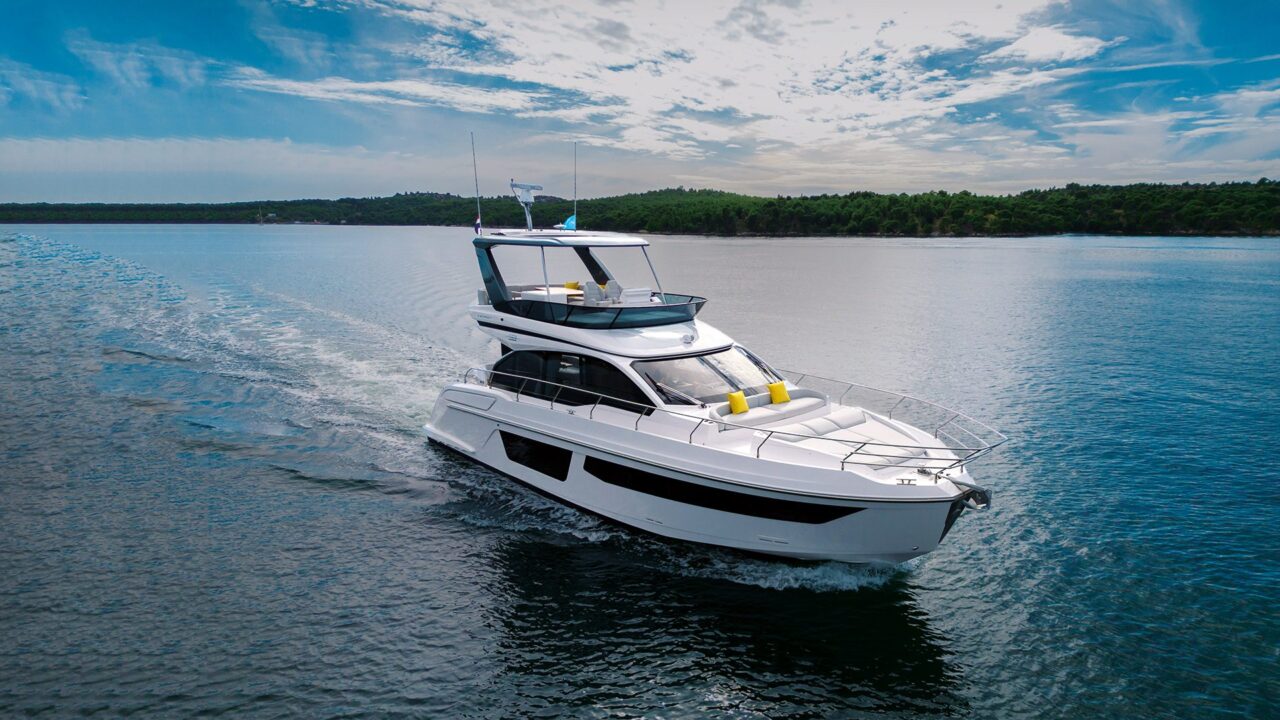
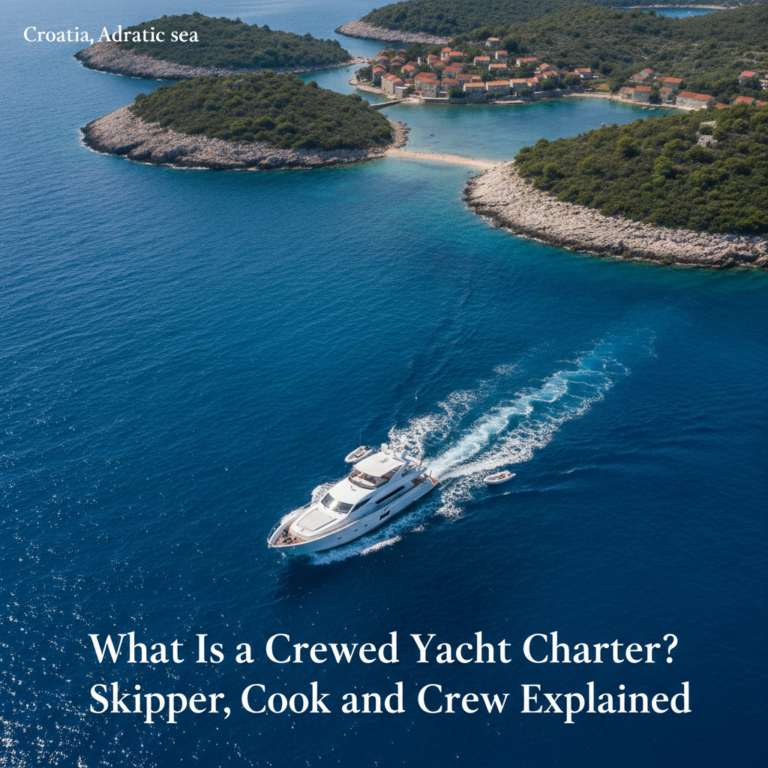
If you’re dreaming of sailing the Adriatic in ultimate comfort, you’ve probably wondered what is a crewed yacht charter and how it differs from other types of yacht holidays. A crewed yacht charter means you hire a luxury vessel complete with a professional team—typically a skipper, cook, and additional crew—who handle every aspect of navigation, meal preparation, and onboard service while you relax and explore Croatia’s stunning coastline. This type of charter offers a completely hands-off experience tailored to your preferences.
Whether you’re exploring Dalmatia’s islands or the Istrian peninsula, a yacht charter with crew included transforms your voyage into a floating five-star hotel experience. In this guide, we’ll explain the crewed charter meaning, introduce you to the crew roles, and help you decide if a full crewed yacht is the right choice for your Croatian adventure.
In This Guide
- What Is a Crewed Yacht Charter? A Complete Definition
- Crewed Charter Meaning: What’s Included in Your Package
- Meet Your Crew: Skipper, Cook, and Crew Roles Explained
- Benefits of a Yacht Charter with Crew Included
- Full Crewed Yacht vs. Bareboat: Which Charter Is Right for You?
- Choosing the Right Crewed Yacht for Your Croatian Adventure
- Understanding Crewed Charter Costs and What to Expect
Key Takeaways
- A crewed yacht charter in Croatia typically includes a professional skipper, dedicated cook/hostess, and sometimes additional crew depending on vessel size
- Crew-inclusive package rates vary widely by yacht size and season, with larger motor yachts commanding the highest weekly figures for 8 guests
- Croatian waters require no sailing license when you choose a yacht charter with crew included—the professional skipper handles all navigation through the Kornati archipelago, Hvar, Vis, and beyond
- Full crewed yacht charters include crew salaries, while you typically cover fuel, food provisions, marina fees, and optional water sports equipment
- Popular crewed routes include the Split to Dubrovnik itinerary covering 120+ nautical miles over seven days with stops at Hvar, Korčula, and Mljet
- Crew gratuity in Croatia typically runs 5-10% of the charter fee, distributed among your skipper, cook, and any additional crew members at voyage end
What Is a Crewed Yacht Charter? A Complete Definition
Understanding what is a crewed yacht charter starts with knowing the fundamental difference from other charter types. A crewed charter means you hire both the yacht and a professional team who manage all technical, culinary, and service aspects of your journey. You’re essentially a guest aboard your own private floating resort.
The crewed charter meaning extends beyond just having people aboard. Your crew becomes your guide to Croatian culture, your personal chef creating custom menus, and your safety guarantee in unfamiliar waters. They know which anchorage offers the calmest swim, which konoba serves the best peka, and how to navigate summer bora winds safely.
This contrasts sharply with bareboat charters, where you captain the vessel yourself. With a charter in Croatia that includes crew, you need zero sailing experience. You simply share your preferences—perhaps you want to explore the Elaphiti Islands or anchor at secluded Stiniva Bay—and the crew makes it happen.
The Legal and Practical Framework
Croatian maritime law requires anyone operating a vessel to hold appropriate licenses. When you book a yacht charter with crew included, the licensed skipper assumes all legal responsibility for navigation, safety equipment, and regulatory compliance. This removes bureaucratic headaches from your vacation.
Most crewed charters operate on weekly schedules, typically Saturday to Saturday, though flexible arrangements exist. Your crew usually includes a minimum of two professionals on vessels up to 50 feet, scaling up to four or more on superyachts exceeding 80 feet.
Different Levels of Crewed Service
Not all crewed charters offer identical service levels. A basic full crewed yacht might include only skipper and cook. Mid-range options add a hostess or deckhand. Luxury charters can feature captains, chefs, stewardesses, engineers, and water sports instructors—sometimes six or more crew members dedicated to 10-12 guests.
Crewed Charter Meaning: What’s Included in Your Package
The crewed charter meaning becomes clearer when you examine what’s actually included in your package. Most Croatian operators bundle the yacht itself, crew salaries, basic insurance, and standard onboard equipment. Everything else typically falls under a separate budget called the Advance Provisioning Allowance or APA.
Your base charter fee covers the vessel rental and crew wages for the agreed period. Standard equipment includes navigation electronics, safety gear, dinghy with outboard motor, and basic fishing equipment. Bedding, towels, and final cleaning are usually included in the base price.
The APA is typically 30% of the charter fee. This fund covers fuel, food and beverages, marina fees, national park entries like Kornati (€15-€20 per person), and any special requests like premium wines or water sports equipment rental.
What You’ll Pay Extra For
Beyond the APA, budget for crew gratuity. Croatian custom suggests 5-10% of the base charter fee, distributed at trip’s end. On that basis, tips typically add another 5-10% of the charter fee. This compensates your team for exceptional service, early mornings, and late-night deck cleaning.
- Premium alcohol and specialty ingredients not covered by standard provisioning
- Private transfers from Split or Dubrovnik airports to the marina
- Scuba diving guides or jet ski rentals beyond included water toys
- Restaurant meals ashore (though many guests prefer the chef’s cooking)
- Spa treatments or private yoga instructors brought aboard
Customization and Menu Planning
Two to four weeks before departure, your cook contacts you to discuss dietary preferences, allergies, and meal styles. Want fresh Adriatic fish daily? Prefer vegetarian Mediterranean cuisine? Celebrating an anniversary with a formal dinner? The onboard chef tailors menus accordingly, shopping at local markets in Split’s Green Market or Dubrovnik’s Gruž market for ingredients.
Meet Your Crew: Skipper, Cook, and Crew Roles Explained
Your skipper serves as captain, navigator, and local expert rolled into one. This professional holds Croatian coastal navigation licenses, knows every island anchorage from Krk to Korčula, and monitors weather patterns obsessively. They plot your daily route, handle all docking maneuvers, and adjust plans when afternoon maestral winds pick up.
Beyond technical duties, skilled skippers become cultural ambassadors. They recommend the family-run winery on Pelješac peninsula, explain the history of Diocletian’s Palace during a Split stop, or arrange a private mooring near the Blue Cave on Biševo. Their local knowledge transforms a sailing trip into an insider’s Croatian adventure.
Most Croatian skippers speak English fluently, with many also conversant in German, Italian, or French. They typically have 10-15 years of Adriatic sailing experience and hold certifications from Croatian maritime authorities plus international credentials like RYA Yachtmaster or equivalent.
The Cook/Hostess: Culinary Artist and Housekeeper
Your cook—sometimes called chef or hostess—manages the galley and interior spaces. This professional prepares three meals daily, often incorporating Croatian specialties like black risotto, pašticada, or fresh grilled brancino. Breakfast might feature homemade pastries and local cheese; lunch could be a Mediterranean spread at anchor; dinner often includes multiple courses paired with Dalmatian wines.
The cook also maintains cabin cleanliness, manages provisions, and often serves as sommelier and barista. On a motor yacht like Haze, the hostess transforms the salon into an elegant dining space for evening meals, then resets it for morning coffee service.
Additional Crew on Larger Vessels
Vessels over 60 feet often carry additional crew. A deckhand assists with sail handling, maintains exterior spaces, manages water sports equipment, and drives the tender for beach transfers. On superyachts, you might find engineers monitoring mechanical systems, stewardesses providing turndown service, and dedicated water sports instructors teaching paddleboarding or wakeboarding.
- Deckhand/sailor: Manages lines, fenders, anchor, water toys, and deck maintenance
- Engineer: Monitors engines, generators, water makers, and technical systems
- Stewardess: Handles interior service, laundry, and cabin preparation
- Water sports instructor: Teaches and supervises kayaking, diving, or other activities
Benefits of a Yacht Charter with Crew Included
The primary advantage of a yacht charter with crew included is complete relaxation. You wake without alarm clocks, find fresh coffee waiting, and never worry about checking weather forecasts or calculating tidal currents. While you swim off Zlatni Rat beach or explore Stari Grad’s narrow streets, the crew handles refueling, water tank filling, and provisioning.
Safety represents another crucial benefit. Croatian waters are generally calm, but summer thunderstorms can develop rapidly, and winter bora winds occasionally exceed 40 knots. Your professional skipper recognizes warning signs, knows protected anchorages throughout the islands, and maintains constant communication with harbor authorities. Families with children particularly appreciate this expertise.
Crewed charters unlock destinations impossible for inexperienced sailors. The narrow channel approaching Lastovo requires precise navigation. Mooring stern-to in packed Hvar harbor demands skill and confidence. The skipper executes these maneuvers flawlessly while you photograph the approach or prepare for dinner ashore.
Insider Access and Local Knowledge
Your crew knows which restaurants require reservations weeks ahead and which family taverns serve better food without tourist prices. They’ll call ahead to arrange a wine tasting at Korta Katarina vineyard or secure a mooring at the exclusive ACI marina in Palmižana. This insider access elevates your entire Croatian experience beyond typical tourist itineraries.
When exploring routes like the popular seven-day Split itinerary, your skipper adjusts daily plans based on current conditions. If northwest winds favor a different island sequence, they’ll revise the route while keeping your must-see destinations intact.
Stress-Free Luxury
Imagine anchoring off Vis island for sunset. Instead of rushing to prepare dinner, you sip local Vugava wine while the chef grills fresh squid caught that afternoon. After dinner, instead of washing dishes and checking anchor position, you simply retire to your cabin while the crew handles cleanup and night watch rotation.
- Zero navigation stress or licensing requirements
- Professional meal preparation using fresh Adriatic ingredients
- Daily cabin service and cleaning
- Expert route planning optimized for weather and your interests
- Access to hidden coves and local recommendations
- Safety monitoring during overnight anchorages
Photo Gallery
Full Crewed Yacht vs. Bareboat: Which Charter Is Right for You?
The full crewed yacht versus bareboat decision hinges on experience, budget, and vacation goals. Bareboat charters cost significantly less—often 40-60% below crewed equivalents—but demand sailing competence, navigation skills, and willingness to handle all onboard tasks yourself. You’ll need appropriate licenses, typically an International Certificate of Competence or equivalent.
Bareboat suits experienced sailors who enjoy the challenge and self-sufficiency of independent cruising. If you’ve skippered vessels in various conditions, know your way around marine electronics, and find joy in plotting courses and managing sail trim, bareboat offers freedom and lower costs. You set your own schedule without coordinating with crew preferences.
Conversely, a full crewed yacht makes sense for families, celebration groups, or anyone prioritizing relaxation over hands-on sailing. Corporate groups chartering for team building or client entertainment almost always choose crewed options. The professional service, gourmet meals, and stress-free experience justify the premium for most luxury travelers.
The Middle Ground: Skippered Charters
A skippered charter offers a compromise between bareboat and full crewed options. You hire just the skipper, handling your own meal preparation and basic housekeeping. This reduces costs while providing professional navigation and local expertise. The skipper experience works well for groups with some sailing background who want safety oversight without full-service luxury.
Skippered charters typically cost 15-25% more than bareboat but noticeably less than full crewed options. You’ll shop at local markets, cook aboard or dine ashore frequently, and maintain your own cabins. The skipper focuses on navigation and seamanship while you control the domestic aspects.
Decision Factors to Consider
Budget remains the practical starting point. If your total charter budget is modest, bareboat or skippered options make sense. If a larger budget fits comfortably, full crewed yachts open up. Group dynamics matter too—eight friends who enjoy cooking together might prefer skippered, while three couples celebrating anniversaries likely want full service.
- Sailing experience and confidence level
- Total budget including all charter costs
- Group composition (families, couples, corporate, celebrations)
- Desired service level and meal expectations
- Willingness to handle navigation and maintenance tasks
- Licensing requirements and documentation
Choosing the Right Crewed Yacht for Your Croatian Adventure
Selecting your crewed yacht starts with guest count and space requirements. Most charter yachts accommodate 6-12 guests in 3-6 cabins. Families with teenagers often prefer larger motor yachts like Nomad, a 33.5 m Mangusta 108 for up to ten guests, where four cabins give everyone privacy. The spacious deck areas also excel for socializing and outdoor dining. Our own charter fleet has no catamarans, only motor and sailing yachts.
Sailing yachts offer more traditional experiences with better upwind performance and generally lower charter fees than equivalent catamarans. Monohulls feel more connected to the sea, heel under sail, and fit more easily into smaller marinas. Motor yachts maximize speed and interior volume but consume more fuel—important given current diesel prices.
Yacht age and refit status significantly impact experience quality. A vessel built in 2020 features modern electronics, efficient air conditioning, and contemporary styling. An older yacht from 2012, even well-maintained, may have dated interiors and less reliable systems. Most premium charters operate yachts under eight years old.
Matching Yacht to Itinerary
Your planned route should influence yacht selection. A Mediterranean charter exploring distant islands benefits from faster motor yachts or performance sailing cats. If you’re island-hopping around the central Dalmatian coast, staying within 20 miles of Split, a comfortable monohull suffices. Shallow-draft catamarans access beaches impossible for deeper-keeled monohulls.
Consider amenities important to your group. Water sports enthusiasts should prioritize yachts offering kayaks, paddleboards, snorkel gear, and diving compressors. Sun-lovers want expansive deck spaces and bimini shading. Wellness-focused groups might seek yachts with larger swim platforms and outdoor shower facilities.
Examples of Different Yacht Types
A luxury sailing yacht like X1, a 22 m Hanstaiger, delivers classic elegance and real sailing performance. This type suits couples or small groups valuing authentic sailing experiences combined with refined comfort. Catamarans provide maximum space and stability, ideal for families or groups prioritizing social areas and easy water access.
- Sailing catamarans: Maximum stability, space, shallow draft (40-60 feet)
- Sailing monohulls: Traditional sailing, better upwind performance (45-65 feet)
- Motor yachts: Speed, volume, luxury amenities (50-80+ feet)
- Gulets: Traditional wooden vessels, authentic Adriatic character (65-100+ feet)
Understanding Crewed Charter Costs and What to Expect
Crewed charter pricing in Croatia varies enormously based on vessel size, age, crew number, and season. A mid-range crewed motor yacht costs noticeably more in July-August peak season than in the May or October shoulder months — see current pricing per yacht on our charter fleet. Premium vessels like Sanref command higher rates reflecting superior appointments and service.
Peak season runs late June through early September, with absolute premium pricing the final two weeks of July and first three weeks of August when European families vacation. Early June and late September offer pleasant weather at lower rates. May and October bring further savings, though weather becomes less predictable.
Weekly base rates work out to a per-guest figure that is far higher on luxury superyachts than on mid-range crewed yachts accommodating 8-10 people. These figures cover only the yacht and crew; remember to budget an additional APA of 30% plus 5 to 10% gratuity.
Hidden Costs and Budget Planning
Beyond obvious expenses, consider transfer costs from airports to marinas—private vans run €150-€300 from Split airport to nearby marinas, more from Dubrovnik. Communication charges sometimes apply if you need satellite internet beyond coastal WiFi. Special occasion extras like birthday cakes, champagne, or flower arrangements add to final costs.
Marina fees deserve attention when planning budgets. Protected ACI marinas charge nightly berth fees that vary with yacht size and location, while free anchoring in national parks requires modest entry fees. Your skipper balances marina stays with anchoring to control costs while ensuring comfort and proximity to attractions.
Value Optimization Strategies
Booking well ahead—six to twelve months for peak season—secures better yacht selection and sometimes early-bird discounts of 5-10%. Shoulder season travel in May, June, or September delivers exceptional value with pleasant weather, fewer crowds, and substantially lower rates. Flexible dates allow your charter company to offer last-minute availability at reduced prices.
- Peak season (July-August): Highest rates, warmest water, busiest anchorages
- Shoulder season (May-June, September): lower rates, excellent weather, smaller crowds
- Early/late season (April, October): 50%+ savings, variable weather, many restaurants closed
- Charter duration: Some operators discount 10+ day charters
- Flexible pick-up points: Departing from less popular bases may reduce costs
Frequently Asked Questions
Do I need any sailing experience to book a crewed yacht charter?
No sailing experience or license is required when you book a yacht charter with crew included. The professional skipper holds all necessary certifications and assumes complete responsibility for navigation, safety, and vessel operation. You’re a guest who simply enjoys the journey while the crew manages all technical aspects. This makes crewed charters perfect for families, celebration groups, or anyone wanting a luxury vacation without sailing knowledge.
How many crew members should I expect on a crewed yacht?
Crew size depends on yacht length and service level. Vessels 40-50 feet typically have two crew (skipper and cook/hostess). Yachts 50-65 feet often carry three crew members (captain, chef, deckhand/stewardess). Superyachts over 80 feet may include four to six crew—captain, chef, stewardess, deckhand, engineer, and sometimes a water sports instructor. The standard ratio is roughly one crew member per four guests for attentive service.
What’s the difference between a crewed charter and hiring just a skipper?
A skippered charter includes only the professional captain, who handles navigation and seamanship while you manage meals, provisioning, and housekeeping. A full crewed yacht charter adds a cook/hostess (and sometimes additional crew) who prepare all meals, maintain cabins, serve drinks, and manage provisioning. Skippered costs 15-25% more than bareboat; full crewed typically runs 50-80% above bareboat rates but delivers hotel-level service.
Are meals and drinks included in the crewed charter price?
The base charter fee covers yacht rental and crew salaries but rarely includes food and beverages. You’ll pay for provisions through the Advance Provisioning Allowance (APA), typically 30% of the base fee. This fund covers groceries, alcohol, fuel, marina fees, and other operational costs. Your cook shops for fresh ingredients at local markets based on your preferences, and unused APA funds are refunded at charter end.
When should I tip the crew and how much is appropriate?
Crew gratuity is customary in Croatia, typically 5-10% of the base charter fee, distributed at voyage end. On a typical charter, tips add roughly 5-10% of the base fee. Divide this among crew members based on service quality—the skipper and chef usually receive larger shares. Present gratuities the final morning in cash (euros) with a thank-you note. Exceptional service warrants the higher 15% range; adequate service might merit 10%.
Ready to Experience Croatia by Yacht?
Let Splendid Yachting plan your perfect Croatian yacht charter.