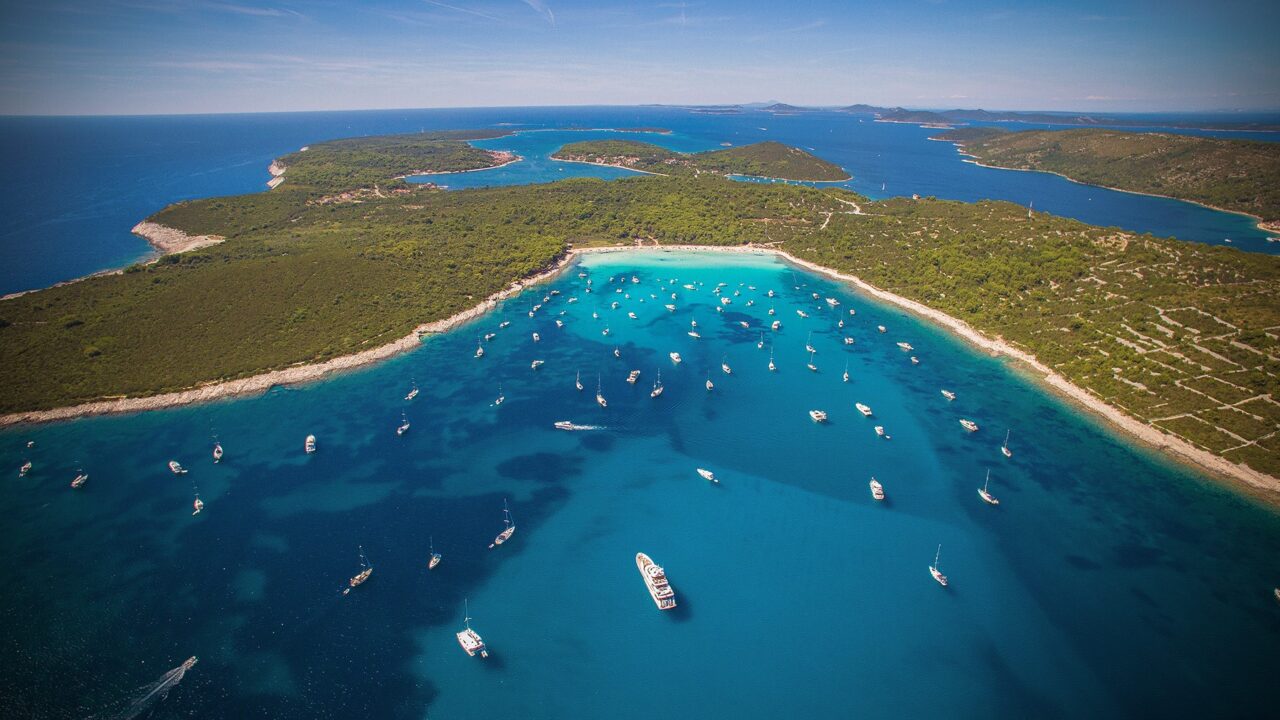
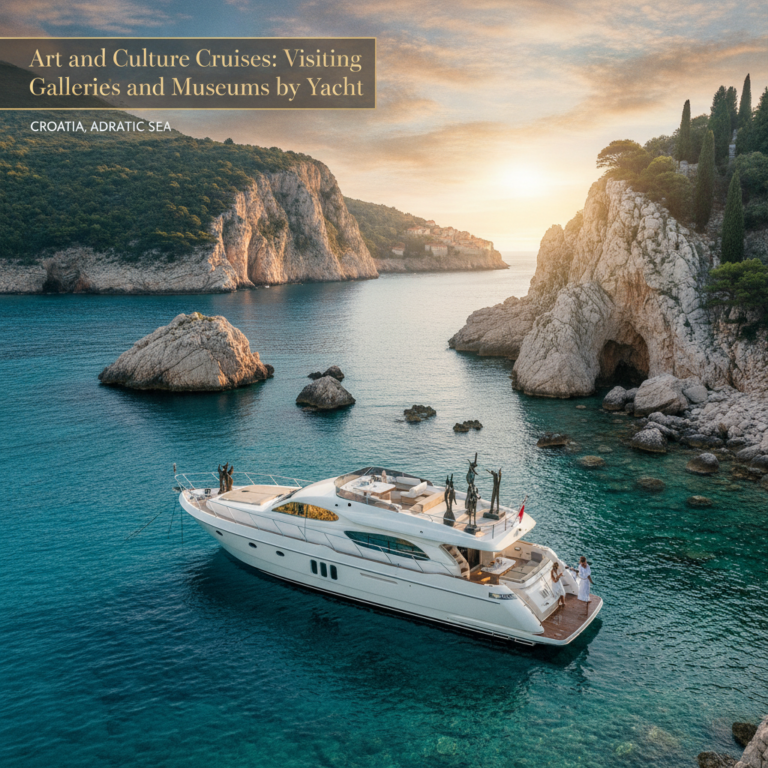
An art cruise yacht Croatia experience combines the freedom of private sailing with access to some of Europe’s most fascinating cultural treasures along the Adriatic coast. Croatia’s islands and coastal cities host world-class galleries, ancient museums, and vibrant contemporary art scenes—all accessible from your private yacht mooring. This unique approach to cultural tourism lets you explore historic collections in Dubrovnik’s museums, discover contemporary galleries in Split, and visit island art spaces, all while enjoying the comfort and flexibility of a luxury charter vessel.
The Croatian coastline offers an exceptional setting for cultural exploration by sea. You can anchor in medieval harbors, step ashore to visit galleries housed in Renaissance palaces, then return to your yacht for sunset cruises between destinations. This seamless blend of maritime adventure and artistic discovery creates an entirely new way to experience Croatia’s rich cultural heritage.
In This Guide
- Art Cruise Yacht Croatia: A Unique Cultural Journey on the Adriatic
- Planning Your Cultural Yacht Charter: Top Gallery Destinations
- Must-Visit Museums Accessible by Private Yacht
- Combining Heritage Sailing Tour Experiences with Coastal Art Scenes
- Creating Your Perfect Art Cruise Yacht Croatia Itinerary
- Practical Considerations for Museum Yacht Tour Planning
- Seasonal Cultural Events Worth Planning Your Route Around
Key Takeaways
- Dubrovnik’s Rector’s Palace Museum houses over 15,000 artifacts spanning six centuries, just 200 meters from ACI Marina
- Split’s Meštrović Gallery showcases 192 sculptures and 583 drawings in a Mediterranean villa complex, 1.5 km from city marina
- Korčula Town Marco Polo Museum and Abbey Treasury are both within a 5-minute walk from the main harbor
- Hvar’s Arsenal Gallery features contemporary Croatian artists and is located directly on the waterfront promenade
- Most Croatian museums charge about €5-11 admission, with summer hours typically 9 AM to 9 PM
- The Lopud Franciscan Monastery museum contains Dubrovnik School paintings and sits just 300 meters from the island’s main anchorage
Art Cruise Yacht Croatia: A Unique Cultural Journey on the Adriatic
The concept of an art cruise yacht Croatia journey transforms traditional museum tourism into a flexible, luxurious adventure. Instead of rushing between cities on fixed schedules, you control the pace and sequence of your cultural discoveries. Your yacht becomes a mobile base, letting you visit morning galleries, enjoy lunch on board, then explore evening exhibitions in a different port.
Croatia’s geography makes this approach particularly effective. The country’s 1,244 islands and 1,778 km of mainland coast host hundreds of cultural institutions. Many of the most significant galleries and museums occupy waterfront locations in historic ports. This concentration along the coast means short walks from marina to museum entrance.
Why Yacht-Based Cultural Tourism Works So Well in Croatia
Croatian coastal cities developed as maritime trading centers over centuries. Their most important cultural institutions naturally clustered near harbors and waterfronts. Today’s yacht visitors benefit from this historic urban planning. In Dubrovnik, the Cultural History Museum sits just inside the Old Town walls, a 10-minute walk from Gruž port. In Zadar, the Archaeological Museum faces the waterfront promenade.
The charter Croatia infrastructure supports cultural tourism exceptionally well. Modern marinas provide secure mooring within walking distance of major attractions. Many offer concierge services to arrange museum tickets and private gallery tours. Your skipper can adjust departure times to accommodate special exhibitions or guided tours.
The Advantages of a Cultural Yacht Charter Over Land-Based Tours
- Flexible scheduling allowing you to spend more time at museums that interest you most
- Ability to visit multiple coastal cities and islands without packing and unpacking
- Access to island cultural sites that require ferry connections for land-based tourists
- Private spaces on board for discussing and reflecting on the art you’ve seen
- Opportunity to photograph coastal museums and galleries from unique sea-based perspectives
Planning Your Cultural Yacht Charter: Top Gallery Destinations
A successful cultural yacht charter requires research and strategic routing. Croatia’s premier art destinations cluster in specific regions, making it possible to design efficient itineraries. The southern Dalmatian coast from Dubrovnik to Split offers the highest concentration of major museums. The northern Adriatic provides access to contemporary galleries in Rijeka and Pula.
Start by identifying your cultural priorities. Are you interested in Old Masters and religious art? Focus on Dubrovnik and Korčula. Prefer modern and contemporary works? Include Split, Hvar, and Rijeka. Archaeological enthusiasts should prioritize Zadar, Nin, and Vis. Your charter route should sequence these stops logically based on prevailing winds and sailing distances.
Dubrovnik: The Cultural Crown of the South
Dubrovnik hosts Croatia’s richest concentration of cultural institutions. The Rector’s Palace Museum displays Renaissance and Baroque art in rooms where the historic Ragusan Republic once governed. The Dominican Monastery Museum houses an exceptional collection of 15th and 16th-century paintings. The Dulčić Masle Pulitika Gallery showcases 20th-century Croatian modernists in a restored granary building.
All three locations sit within Dubrovnik’s Old Town, accessible via a 15-minute walk from ACI Marina Dubrovnik. The Martita, a classic gulet, offers comfortable accommodation while exploring this cultural hub. Plan at least two full days to properly experience Dubrovnik’s museums without rushing.
Split: Ancient History Meets Contemporary Art
Split provides a fascinating contrast between ancient and modern cultural attractions. Diocletian’s Palace basement galleries display Roman artifacts discovered during excavations. The City Museum occupies a Gothic palace with collections spanning Split’s 1,700-year history. The Meštrović Gallery, set in the sculptor’s former summer residence, is Croatia’s premier single-artist museum.
The Split waterfront puts you minutes from these attractions. The Nomad makes an excellent base for exploring Split’s art gallery Croatia boat accessible cultural scene. The city also serves as a logical mid-point for routes connecting Dubrovnik with northern destinations.
Hvar: Island Culture and Venetian Heritage
Hvar Town combines small-scale charm with surprising cultural depth. The Arsenal Gallery hosts rotating contemporary art exhibitions in a former Venetian shipyard. The Benedictine Convent Museum displays intricate lacework designated as UNESCO Intangible Cultural Heritage. The Franciscan Monastery museum contains Renaissance paintings and an important library.
These venues cluster around Hvar’s compact harbor. Most are within 200 meters of the main waterfront, making Hvar ideal for a museum yacht tour stop. The town also offers excellent restaurants and evening entertainment between cultural visits.
Must-Visit Museums Accessible by Private Yacht
Croatia’s museum network extends far beyond the major cities. Island communities and smaller coastal towns host specialized collections that larger tour groups often miss. These institutions offer intimate viewing experiences and often showcase regional artistic traditions not found in metropolitan museums.
Your art gallery Croatia boat approach allows you to discover these less-visited treasures. Many occupy historic buildings with architectural significance equal to their collections. The combination of setting, art, and waterfront location creates memorable cultural experiences unavailable to coach tour visitors.
Korčula Town Museums and Cultural Institutions
Korčula’s compact medieval quarter houses several important museums. The Marco Polo House museum (regardless of historical debate) displays medieval Korčula life. The Town Museum in the 16th-century Gabriellis Palace contains Greek and Roman artifacts. The Abbey Treasury showcases religious art including works by Italian Renaissance masters.
All locations sit within Korčula’s walled town, reachable in under 10 minutes from the marina. The town’s scale makes it perfect for morning cultural visits followed by afternoon sailing. Consider anchoring overnight to experience Korčula’s famous Moreška sword dance performances.
Vis: Archaeological Treasures on a Remote Island
Vis Island’s isolation preserved extensive Greek and Roman remains. The Archaeological Museum in Vis Town displays amphorae, anchors, and sculptures recovered from surrounding waters. The collection documents 2,400 years of maritime trade. Nearby, the Franciscan Monastery holds Renaissance art and a library with rare manuscripts.
Vis’s remoteness means fewer visitors despite significant collections. The town harbor provides good protection and puts you steps from these cultural sites. Vis makes an excellent overnight stop on routes between Split and Hvar, adding archaeological depth to your cultural yacht charter experience.
Lopud Island: Franciscan Art in an Island Setting
Lopud, part of the Elaphiti Islands near Dubrovnik, hosts a surprising cultural gem. The Franciscan Monastery museum contains paintings from the Dubrovnik School, religious artifacts, and an important pharmacy collection. The monastery complex dates to 1483 and includes beautiful cloistered gardens.
Lopud’s sandy bay provides excellent anchoring just 300 meters from the monastery. The island’s car-free environment and relaxed pace create a contemplative atmosphere ideal for appreciating religious art. Lopud works perfectly as a half-day cultural stop between Dubrovnik and Korčula.
Photo Gallery
Combining Heritage Sailing Tour Experiences with Coastal Art Scenes
A heritage sailing tour approach layers cultural experiences throughout your voyage. Beyond museum visits, this includes exploring UNESCO World Heritage sites, traditional island architecture, and living cultural practices. The Croatian coast offers dozens of heritage locations accessible by yacht, many combining natural beauty with historical significance.
The key is integrating heritage sites into your sailing route naturally. Rather than viewing cultural stops as interruptions to sailing, they become focal points that give structure and meaning to your journey. This approach particularly suits week-long or longer charters where you have time for both sailing and substantive cultural engagement.
UNESCO Sites Accessible From Your Yacht
Croatia claims ten UNESCO World Heritage sites, five directly on the coast. Dubrovnik’s Old Town is the most famous, but Split’s Diocletian Palace complex equally merits extended exploration. The Stari Grad Plain on Hvar preserves a 2,400-year-old Greek agricultural landscape. Šibenik’s Cathedral of St. James represents unique Renaissance architecture.
Your skipper experience team can coordinate timing to avoid cruise ship crowds at these popular locations. Early morning and evening visits provide more intimate encounters with these heritage spaces. Many UNESCO sites in Croatia offer reduced admission after 6 PM during summer months.
Traditional Island Arts and Living Heritage
Beyond formal museums, Croatian islands maintain living artistic traditions worth experiencing. Pag produces distinctive lacework using techniques unchanged for centuries. Hvar’s lavender harvest in June and July involves traditional farming methods. Korčula’s stone carving workshops continue medieval traditions visible in the town’s architecture.
These cultural practices don’t appear in standard guides but add authentic depth to a heritage sailing tour. Your charter broker can arrange workshop visits, artisan meetings, and demonstrations. These encounters provide context that makes formal museum collections more meaningful.
Architectural Heritage in Coastal Villages
Croatian coastal architecture tells the story of successive cultural influences. Venetian Gothic buildings dominate southern Dalmatian towns. Renaissance palaces line Split’s waterfront. Austro-Hungarian neoclassical structures define Opatija and Rijeka. Each architectural style reflects political and economic history.
Sailing between ports, you’ll notice how architectural character shifts. Your skipper can identify the best-preserved examples and suggest walking routes through historic neighborhoods. Many coastal villages offer architecture as impressive as formal heritage sites, without admission fees or crowds.
Creating Your Perfect Art Cruise Yacht Croatia Itinerary
Designing an art cruise yacht Croatia route requires balancing sailing distances, museum opening hours, and your personal interests. Start with your primary cultural targets, then build sailing days around them. Most Croatian museums close Mondays, so plan sea days or outdoor activities accordingly. Summer brings extended hours but also larger crowds at major institutions.
A typical week-long cultural charter might include two or three major museum cities and several smaller island stops. This pacing allows thorough exploration without feeling rushed. Consider spending two nights in ports with extensive collections, single nights at smaller destinations. Your yacht becomes a constant while cultural environments change daily.
Sample Seven-Day Cultural Route: Dubrovnik to Split
Day one: Board in Dubrovnik, explore Rector’s Palace Museum and Dominican Monastery galleries. Day two: Sail to Lopud for Franciscan Monastery, continue to Korčula (32 nautical miles). Day three: Morning museums in Korčula, afternoon sail to Vis (26 nautical miles). Day four: Archaeological Museum in Vis, sail to Hvar (22 nautical miles). Day five: Hvar’s cultural sites and Arsenal Gallery. Day six: Sail to Split (28 nautical miles), afternoon Meštrović Gallery. Day seven: Morning Diocletian’s Palace museums, disembark.
This itinerary covers approximately 108 nautical miles with daily sailing legs under four hours. It includes all major southern Dalmatian cultural sites while maintaining comfortable pacing. The route works well with prevailing summer winds, typically sailing with favorable conditions. For detailed route planning, review options for a one-way charter Croatia experience.
Extended Two-Week Art and Culture Voyage
Longer charters allow deeper cultural immersion and more remote destinations. A two-week voyage could extend north from Split to Zadar and Rijeka, or south to Montenegro’s Kotor Bay. The Dubrovnik Hvar superyacht route provides a foundation that can expand in either direction based on your interests.
Two weeks also permits rest days. Cultural tourism can be mentally demanding. Build in days for beach relaxation, swimming, and casual exploration without museum obligations. This rhythm prevents fatigue and keeps you engaged with the art and history you’re experiencing.
Thematic Cultural Routes
Consider organizing your voyage around specific themes. A religious art tour might focus on monastery museums and cathedral treasuries. An archaeological route would emphasize Greek and Roman sites. A contemporary art charter could connect the modern galleries in Split, Rijeka, and Zagreb (accessible via land excursion from coastal marinas).
Thematic routes create intellectual coherence that enriches your understanding. Seeing multiple examples of Dubrovnik School painting across different islands helps you recognize stylistic patterns. Visiting several archaeological museums lets you compare regional variations in ancient material culture.
Practical Considerations for Museum Yacht Tour Planning
Successful museum yacht tour execution requires attention to logistics. Croatian museums vary widely in size, facilities, and visitor amenities. Major institutions in Dubrovnik and Split offer audio guides, climate control, and modern displays. Smaller island museums may have limited hours and basic presentation, but often allow more intimate viewing and personal interaction with curators.
Research opening hours carefully. Most Croatian museums close one day weekly, usually Monday. Summer season (June through September) brings extended hours, often 9 AM to 9 PM. Winter schedules may reduce to 9 AM to 4 PM with midday closures. Some island museums operate only during summer months. Call ahead or have your charter coordinator verify current schedules.
Admission Fees and Ticketing
Museum admission in Croatia remains affordable compared to Western European rates. Expect about €5-11 for most institutions. Major museums like Dubrovnik’s Rector’s Palace charge about €13. Combination tickets often provide better value—Dubrovnik offers a Cultural-Historical Museums card covering nine institutions for about €33.
Many museums accept credit cards, but smaller institutions may require cash. ATMs are readily available in all coastal towns with marinas. Some museums offer reduced admission after 6 PM or on specific weekdays. Senior discounts (65+) typically provide 50% reduction. Student discounts require international student ID cards.
Photography Policies and Dress Codes
Photography policies vary by institution. Most Croatian museums allow non-flash photography for personal use. Some prohibit photography of specific artworks or in certain rooms. Religious institutions—monastery museums, cathedral treasuries—often have stricter rules. Always ask permission before photographing.
Dress codes apply mainly to active religious sites. Monastery museums may require covered shoulders and knees. Churches and cathedrals enforce these standards. Secular museums have no specific dress requirements, but air conditioning can make them cool; bring a light cover-up during summer visits.
Guided Tours and Private Viewings
Many Croatian museums offer guided tours in English, particularly major institutions in tourist centers. Private guides provide deeper insight than self-guided visits. Your charter broker can arrange private museum tours, often outside regular hours. These exclusive viewings cost about €50-105 per hour but deliver exceptional experiences.
Art historians and archaeologists in Croatian coastal cities often provide freelance guiding services. They can accompany you through museums, providing scholarly context that standard audio guides lack. For serious art enthusiasts, this investment significantly enhances understanding and appreciation.
Seasonal Cultural Events Worth Planning Your Route Around
Croatia’s cultural calendar includes festivals and events that add extra dimension to art cruise yacht Croatia voyages. Summer brings the highest concentration of cultural programming. Music festivals, theater performances, and art exhibitions proliferate across the coast. Planning your charter to coincide with specific events can create highlight experiences unavailable during other periods.
The Dubrovnik Summer Festival (July 10 – August 25) transforms the city into an open-air performance venue. The Split Summer Festival runs similar dates with theater and music in Diocletian’s Palace. Smaller events like the Korčula Sword Dance performances (May through September, twice weekly) provide intimate cultural encounters.
Art Biennales and Major Exhibitions
Croatian cities periodically host large-scale contemporary art events. The Mediterranean Biennial in Split occurs biennially in odd years. Zadar hosts contemporary art exhibitions in the Museum of Ancient Glass. These temporary shows often feature international artists alongside Croatian contemporaries.
Check museum websites before finalizing your charter dates. Major temporary exhibitions sometimes justify adjusting your itinerary. The Meštrović Gallery in Split, for example, occasionally hosts special exhibitions of Croatian modern masters that supplement the permanent collection.
Traditional Festivals with Cultural Components
Religious festivals and traditional celebrations incorporate art and cultural heritage. The Feast of St. Blaise in Dubrovnik (February 3) includes processions with historic regalia and church treasuries on display. The Marco Polo Festival in Korčula (July) combines historical reenactments with traditional music and crafts.
These events provide living context for the historical objects you’ll see in museums. Watching the Moreška sword dance in Korčula helps you understand the military traditions reflected in the Town Museum’s weapons collection. Attending religious processions illuminates the function of liturgical artworks now displayed behind glass.
Shoulder Season Cultural Advantages
May, June, September, and October offer significant advantages for cultural yacht charters. Museums remain open with full summer hours but receive fewer visitors. You’ll have galleries nearly to yourself. Sailing conditions are excellent, often superior to high summer. Marina rates decrease, and restaurant reservations become easier.
The quality of light during shoulder seasons particularly benefits photography enthusiasts. Autumn light in Dubrovnik and spring morning light in Split create stunning conditions for capturing architectural details and museum exteriors. A charter Mediterranean voyage during these months balances ideal cultural tourism conditions with excellent sailing weather.
Frequently Asked Questions
How much walking is involved in a typical cultural yacht charter day?
Most Croatian museums sit within 5-15 minutes walking from marinas. A full museum day might involve 3-5 kilometers of walking total, including exploration of surrounding historic districts. The compact nature of Croatian coastal towns keeps walking distances manageable. Comfortable walking shoes are essential, as many Old Town streets feature uneven stone paving.
Can we visit museums in rough weather when sailing is inadvisable?
Absolutely. Cultural yacht charters provide excellent flexibility during poor weather. Your skipper will likely keep you in harbor during storms, making it an ideal time for extended museum visits. Croatian coastal cities offer multiple indoor cultural attractions within walking distance of protected marinas. Bad weather days often become cultural highlights of the voyage.
Are Croatian museum labels and descriptions available in English?
Major museums in tourist centers like Dubrovnik, Split, and Zadar provide extensive English labeling and often audio guides in multiple languages. Smaller island museums may have limited English translation. Many offer printed English guides or information sheets. Museum staff in tourist areas generally speak English and can answer questions about the collections.
How should we balance sailing time with museum visits on our charter?
A good rule of thumb is limiting sailing to 3-4 hours daily on cultural charters, leaving full mornings or afternoons for museums. Plan intensive cultural days in cities like Dubrovnik or Split with minimal or no sailing. Alternate museum-heavy days with lighter sailing days focused on coastal scenery and swimming. Communication with your skipper helps optimize this balance based on weather and your energy levels.
What type of yacht works best for an art and culture focused charter?
Motor yachts offer advantages for cultural charters due to faster transit times between destinations, leaving more time ashore. However, traditional gulets like the Stardust of Mary or sailing yachts like the Champion provide more atmospheric experiences that complement the historical focus. Choose based on your group size, mobility needs, and whether the sailing experience itself is important to you, or simply a means of transportation between cultural sites.
Ready to Experience Croatia by Yacht?
Let Splendid Yachting plan your perfect Croatian yacht charter combining luxury sailing with cultural discovery.
Book Your Charter